Sunday, 12 May 2013

‘Assad must go’: Western-Gulf intransigence bulwarks peace in Syria

For anyone who has been critical of the Western narrative on Syria, the ongoing diplomatic circus begs a very basic question: How can countries which have bankrolled and armed the insurgency honestly broker a meaningful peace deal? Well, they can’t. The joint effort recently announced by Moscow and Washington to bring the government and insurgents to an international conference in line with the Geneva Communiqué is a welcoming development, but some major issues have already come to the forefront. Firstly, there is ongoing disagreement over who should represent the opposition in a Syrian peace process. In addition to the blatant Qatari proxies in the Syrian National Coalition (SNC), Russia has requested that the National Coordinating Body (NCB) also be present. In stark contrast to the foreign-based SNC, which is lined with figures who have spent the past few decades in the West, the NCB is the internal opposition - and it has caught a lot of flak because it opposes the armed uprising and talks to the Syrian government.

The SNC has maintained it could not accept an invitation to dialogue unless Assad's removal was guaranteed. Russia will not allow for Assad’s departure to be a precondition of talks, and Kerry looks to have shifted the US position by saying Assad's exit should be the outcome of negotiations on a transitional government, rather than a starting point. Let’s be clear – before this conflict started in 2011, Assad oversaw a political system which was certainly authoritarian. The economy was stagnant, the state poorly handled overpopulation issues, and the agricultural sector was suffering from long periods of drought. When Bashar took over from his father, he granted more political breathing space to dissidents, and then backpedalled on reforms when popular movements quickly took shape. In combating the insurgency, Syrian forces killed many of their own citizens in the crossfire. But no matter what anybody thinks of Assad, it is not the place of Washington, London, or Doha to decide his political fate.

Read the full story on RT.com

Nile Bowie is a Malaysia-based political analyst and a columnist with Russia Today. He also contributes to PressTV, Global Research, and CounterPunch. He can be reached at nilebowie@gmail.com.

Saturday, 11 May 2013

Riding waves on the M’sian tsunami

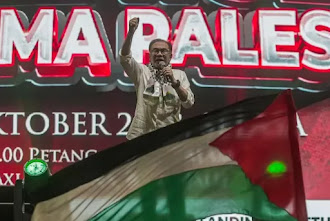
The mood was jubilant at the Kelana Jaya mass rally held on the evening of May 8, as some 50,000 to 70,000 participants filled the stadium and crowded the highway. The national anthem was sung, slogans were changed, flags were waved, and people dispersed peacefully. I cannot recall witnessing any police presence at the event or along the highway. Participants honked horns and carried around placards that read “Save Malaysia”, “1Bangla”, and my personal favorite, “Bangla Nasional (BN)”. For one thing, the multi-ethnic crowd was a testament to Najib’s misstep with the “Chinese Tsunami” statement. The thrust of his statement isn’t incorrect; Chinese voters by and large abandoned BN and voted for the opposition. Really, the outpouring of support for Pakatan reflects an “Urban & New-Media User Tsunami,” which doesn’t exactly role off the tongue, so better or for worse, let’s call it a “Malaysian Tsunami”.

The swathes of discontent (predominately) young and middle-aged participants at the rally are indicative of the massive trust deficit the BN is faced with. While it’s evident that many have lost faith in the government and the electoral authorities, the vast majority of opposition supporters are hostile to legitimate criticism of the Pakatan coalition and unwilling to scrupulously scrutinize hearsay and social-media rumours. As questionable pictures float around social-media purporting to show “foreigners” standing in line to vote as definitive proof of BN being engaged in fraud, the DAP has condemned social network users for spreading rumours and allegations that a massive blackout took place in Bentong during the tallying of votes, at which time EC officials brought in “dubious ballot boxes” that favoured BN. The opposition leader’s claims of 40,000 foreign nationals being flown into Malaysia to vote for BN remain unsubstantiated.

Read the full story on FMT.com

Nile Bowie is a Malaysia-based political analyst and a columnist with Russia Today. He also contributes to PressTV, Global Research, and CounterPunch. He can be reached at nilebowie@gmail.com.
Thursday, 9 May 2013

The dust settles on BN’s victory

Facebook profile pictures have gone black in protest of the prevailing status quo, following Barisan Nasional’s weakest electoral performance in history. The results have yielded a tremendous mood of disappointment communicated over social media, which represent the urban middle-class constituencies that came out in full force for Pakatan Rakyat. This election proves that the two coalition system is now firmly entrenched and that the opposition’s core principles of fighting corruption and creating more equitable wealth distribution resonate deeply with the electorate; the message has never been clearer to those in Putrajaya. DAP delivered its strongest performance at the polls to date, retaining Penang while the opposition coalition made significant inroads in Sabah, Sarawak, and Johor. The results are reflective of real demographics, and for the most part, these were reasonably fair elections that passed with no major incident. Barisan retained Putrajaya thanks to support from the rural electorate who felt like the development projects and populist policies on offer were the safest bet.

Emotional refutations of the poll results have gone viral, along with slogans such as “R.I.P. Democracy”. The reality is that Pakatan is now in a position where it can more effectively keep BN on its toes; it has convincingly denied the BN its customary two-thirds majority and major opposition figures have retained their seats with solid majorities. BN’s Ali Rustam fell in Malacca whilst Abdul Ghani Othman lost decisively in Johor; candidates like Raja Zainal Abidin, Saifuddin Abdullah, Kong Cho Ha, and Raja Nong Chik were also defeated. Although the Barisan retained the Federal government, the doom and gloom seen on social media is not warranted as the opposition asserted itself compellingly. Some would argue Najib’s weak mandate might prove problematic for him in internal party elections, but it’s clear that the rural vote was garnered heavily by the PM’s personal appeal. Najib is an asset to the Barisan, but his failure to acquire support from the Chinese community will have long-term implications.

Read the full story on FMT.com

Nile Bowie is a Malaysia-based political analyst and a columnist with Russia Today. He also contributes to PressTV, Global Research, and CounterPunch. He can be reached at nilebowie@gmail.com.

Sunday, 5 May 2013

Heroin, cash & plastic bags: America’s mess in Afghanistan

If the lawlessness, poverty, and endemic corruption of Afghanistan are indicative of anything, it is that the multi-billion dollar efforts to restore stability in the region have been an abject failure. As the scheduled 2014 reduction of American-led NATO troops moves closer, the occupying forces leave behind a state where none of their initial goals have been realized. The Afghan central government is weak and hopelessly corrupt, the national armed forces are disorganized and resentful of foreign presence, the Taliban still wield notable influence, women remain extremely marginalized, Afghans are trapped in abject poverty, and the occupiers themselves continue to shoulder the responsibility for heavy civilian causalities. Tens of billions have been poured into Afghanistan over the past decade, but the fact is that official figures of aid and financial resources spent in the country on paper do not come close to what was actually doled out to US proxies.

Reports confirm that tens of millions of US dollars in cash were delivered by the CIA in suitcases, backpacks and plastic shopping bags to the office of Afghanistan President Hamid Karzai since his installation in 2004. The report states that the ‘ghost money’ paid to Karzai's office was not subject to oversight and restrictions placed on official American aid or the CIA's formal assistance programs, and much of it went to “warlords and politicians, many with ties to the drug trade and in some cases the Taliban.” The report also cites an anonymous US official who claimed, "The biggest source of corruption in Afghanistan was the United States." These revelations should not only raise the eyebrows of US taxpayers – the disingenuous reality of American funds finding their way into the pockets of the Taliban should raise blood pressures.

Read the full story on RT.com

Nile Bowie is a Malaysia-based political analyst and a columnist with Russia Today. He also contributes to PressTV, Global Research, and CounterPunch. He can be reached at nilebowie@gmail.com.

Saturday, 4 May 2013

Anwar’s politicization of ‘fraud’

There is no doubt that social-media commentators will not take kindly to the message of this article. Regardless of our political persuasions, those in the electorate should not abandon objectivity when assessing the claims of political orators on both sides of the divide. According to recent polling evaluations conducted by the Merdeka Center, the country is nearly spilt down the middle with respect to May 5th’s decision; the result is too close to call for anyone to make a definitive conclusion. Therefore, some would call Anwar Ibrahim’s recent assertion that only 'massive fraud' would prevent his victory, to be deeply disingenuous and politically irresponsible. This statement presupposes that any election result that yields anything other than Anwar’s victory is: invalid, illegitimate, and fraud. This and other statements made by the opposition leader alienate anyone who votes for Barisan Nasional (nearly half the country, according to independent polls).

For a man who has spoken at length to foreign press about turning Malaysian into a ‘mature democracy’, such a scathing statement utterly fails to communicate these aspirations by demonstrating his willingness to politicize hearsay and disregard polls that claim Barisan has about the same level of support that he enjoys. Anwar and the Pakatan have built their campaign upon the perception that the electoral system is rigged in favor of the incumbent, and in doing that, speculation on opposition news portals has become unquestionable truth for many who get their news through social media. Momentary hysteria ensued following recent allegations that the Electoral Commissions’ indelible ink can be washed off, which was used allege that BN would cheat its way into power by allowing people to submit multiple ballots. This was shortly after debunked by the EC in front of reporters, proving that the indelible ink could not be removed from ones finger despite washing several times using various chemicals and solutions. In the context of surfacing reports that the ink is easily washed off, the EC has previously laid the blame on polling officers for not shaking the ink bottles properly before applying them to the voters.

Read the full story on FMT.com

Nile Bowie is a Malaysia-based political analyst and a columnist with Russia Today. He also contributes to PressTV, Global Research, and CounterPunch. He can be reached at nilebowie@gmail.com.

Thursday, 2 May 2013

Fork in the road of Malaysian story

Political passions and campaign fervour abound as the clock continues ticking down the seconds until Malaysians take part in polls that may ultimately empower a new generation of political leaders, for better or for worse. The explosion of social media users, up 45% from 2008, will be a critical factor in this general election. Although it often rails against perceived media “unfreedom”, the opposition has dominated the new media and has made its voice heard through various campaigns that have swayed a large portion of young voters. Taken by the fiery rhetoric of Malaysia’s opposition leaders, many have perhaps overlooked the reality that these orators are politicians too, with their own interests, agendas, and careers at stake. The nation – especially the online-savvy middle class – is extremely polarised and many feel disillusioned with the main issues which have been raised ad nauseum: elite corruption, citizen equality, freedom of expression, the rising cost of living, among other concerns.

Among the poor and in the Malay kampungs that have traditionally been Barisan Nasional-strongholds, there is a fear of unknown political terrain that may adversely affect low-income communities, who are most vulnerable to feeling the burn if the economy is mismanaged following a political transition. Of course, the question of safeguarding one’s cultural and racial identity is a key factor to personal political decisions made by the majority of individuals, irrespective of whatever egalitarian rhetoric masks these sentiments. Malaysians generally tend to agree on what the major shortcomings are, and that these issues have to be addressed more meaningfully, with more action than words. One segment of society feels it’s time to challenge the infallibility of the BN by empowering a coalition of ideologically divided parties to finally wash the country free of corruption, while the other has placed their confidence in the promise of BN’s transformation agenda, which has began steering the country in a more equitable, representative, and democratic direction.

Read the full story at FMT.com

Nile Bowie is a Malaysia-based political analyst and a columnist with Russia Today. He also contributes to PressTV, Global Research, and CounterPunch. He can be reached at nilebowie@gmail.com.

Tuesday, 23 April 2013

Moral monstrosity: America’s for-profit Gulag system

The private prison population in the US has rocketed 17-fold over the last two decades mostly on the shoulders of the deep-pocketed prison lobby, and the business continues to thrive. Try confining yourself to a small room in your home, like a bathroom or a closet, and spend a few hours there. One only cringes to imagine the detrimental psychological effects that kind of solitude creates for individuals who are subjected to solitary confinement for years at a time, knowing only the walls of their cell and the shades of light that creep across them. The abhorrent state of affairs at the Guantanamo facility often makes international headlines and arguably overshadows the calamity that is the US domestic prison system – where over six million people are subject to some form of correctional supervision, an amount exceeding those who toiled in the Soviet gulags during Stalin’s reign. In the United States, some fifty thousand inmates pass their days in solitary confinement. While there is undoubtedly no shortage of violent criminals in America’s jails, millions are dolled out annually by privately owned prison lobbies directly to politicians in an effort to influence harsher ‘zero tolerance’ legislation and mandatory sentencing for many non-violent offenses.

While the US faces economic stagnation and unprecedented spending cuts to programs of social uplift, business is booming for the private prison industry. Like any other business, these institutions are run for the purpose of turning a profit. State and federal prisons are contracted out to private companies who are paid a fixed amount to house each inmate per day. Their profit depends on spending the minimum amount necessary on each inmate day-to-day, allowing private-hands to pocket the remaining money. For the corrections conglomerates of America, success depends on housing the maximum numbers of inmates for the longest potential time as inexpensively as possible. Consider that the United States has the highest incarceration rate in the world, far surpassing any other nation – for every 100,000 Americans, 743 citizens sit behind bars. The harsher sentences meted out to non-violent offenders in contrast to other industrialized nations speaks volumes of America’s enthusiastic embrace of a prison industrial complex.

Read the full story at RT.com

Nile Bowie is a Malaysia-based political analyst and a columnist with Russia Today. He also contributes to PressTV, Global Research, and CounterPunch. He can be reached at nilebowie@gmail.com.